
When planning to build or buy a new home, most of us focus on the aesthetics: where our furniture will go, where we want to add a feature wall, or how the kitchen will look with upgraded appliances.
However, as we move further along, we eventually have to assess the home’s structure and safety and, in Florida especially, be confident it can weather any storm it may face.
A common misconception about manufactured homes is that they can’t withstand the strong winds and storms Florida is known for. However, we take Florida Wind Zone requirements for manufactured homes seriously. We’ll help you understand how manufactured homes and Wind Zones relate, and the steps we take to keep your home safe wherever you live.
So what are “wind zones”?
To ensure homes are built to responsible safety standards, the US Department of Housing and Urban Development (HUD) has created policies that set building requirements, including the wind loads that all homes must be able to withstand. These Wind Zones divide the country into three areas based on the severity of windstorms that homes in those areas may face. Because of our coasts and frequent storms, Florida is entirely in Zones 2 and 3.
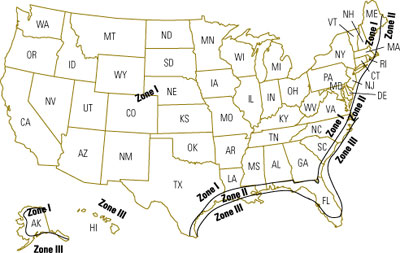
Zone One
Encompassing most of the United States, Zone 1 is the most lenient area for building homes. Put simply, Zone 1 accounts for winds up to 70 miles per hour. If you’ve spent any time living in Florida, you’re probably already thinking that building a Zone 1 home in Florida would be a mistake—we see much stronger winds, especially during hurricane season. In fact, Florida has no Zone 1 areas, so all homes must at least meet Zone 2 requirements.
Zone Two
Although it is significantly smaller than Zone 1 in the United States, Zone 2 covers most of Florida. Stretching from the southern tip of Texas to most of the East Coast, Zone 2 homes are built to withstand wind speeds up to 100 miles per hour.
At Prestige Homes, we build to Zone 2 standards by default. All our floor plans meet this requirement, since most of our homes are built for Florida residents.
Zone Three
The smallest Wind Zone, but possibly the most important, Zone 3 homes are built to withstand winds up to 110 miles per hour. When comparing Wind Zone 2 vs. Wind Zone 3 areas in the United States, Zone 3 covers most of Florida’s southern coast, all of Hawaii, and a few other small coastlines in the United States.
Because all of Prestige’s homes are built-to-order, we build your home to the Wind Zone where you plan to live. If you’re closer to the coast in a Zone 3 area, we’ll ensure your home can withstand sustained winds of up to 110 MPH. And if you’re in a Wind Zone 2 area but want the additional strength of a home built for Wind Zone 3, you can add that option to the specifications sheet before the factory builds the home.
How Accurate Are Wind Zones?
Although modern technology has made weather predictions much more accurate than a few decades ago, weather can still be unpredictable. However, in recent years, homes built according to these Wind Zones have fared significantly better than homes built before them. So while it doesn’t guarantee complete safety, it can help your home withstand much more than it would without the HUD code in place.
Are Manufactured Homes Safe in a Hurricane?
In Florida, we see incredibly powerful storms that have destroyed even the sturdiest site-built homes and commercial buildings. No home or building can ever be 100% guaranteed to withstand nature’s forces. But there are ways to reduce risk and keep your home as safe as possible. Modern manufactured homes must meet federal regulations, so no matter where you live, they are built with strict safety standards. For this reason, manufactured homes are just as safe as site-built homes in a hurricane, and in some cases, even safer.
If you want to confirm your manufactured home’s Wind Zone, check its posted HUD data plate or the county map of Wind Zones in Florida.
Manufactured Homes Built to Withstand Florida’s Weather
Every Prestige home is built to order for your land’s exact Wind Zone, so you never have to guess whether your home meets your area’s standards. That’s real peace of mind in a state where storms don’t take chances, and neither should your home. Find your local Prestige Model Center and talk with a team that can walk you through Wind Zone requirements, floor plans, and financing in one visit.